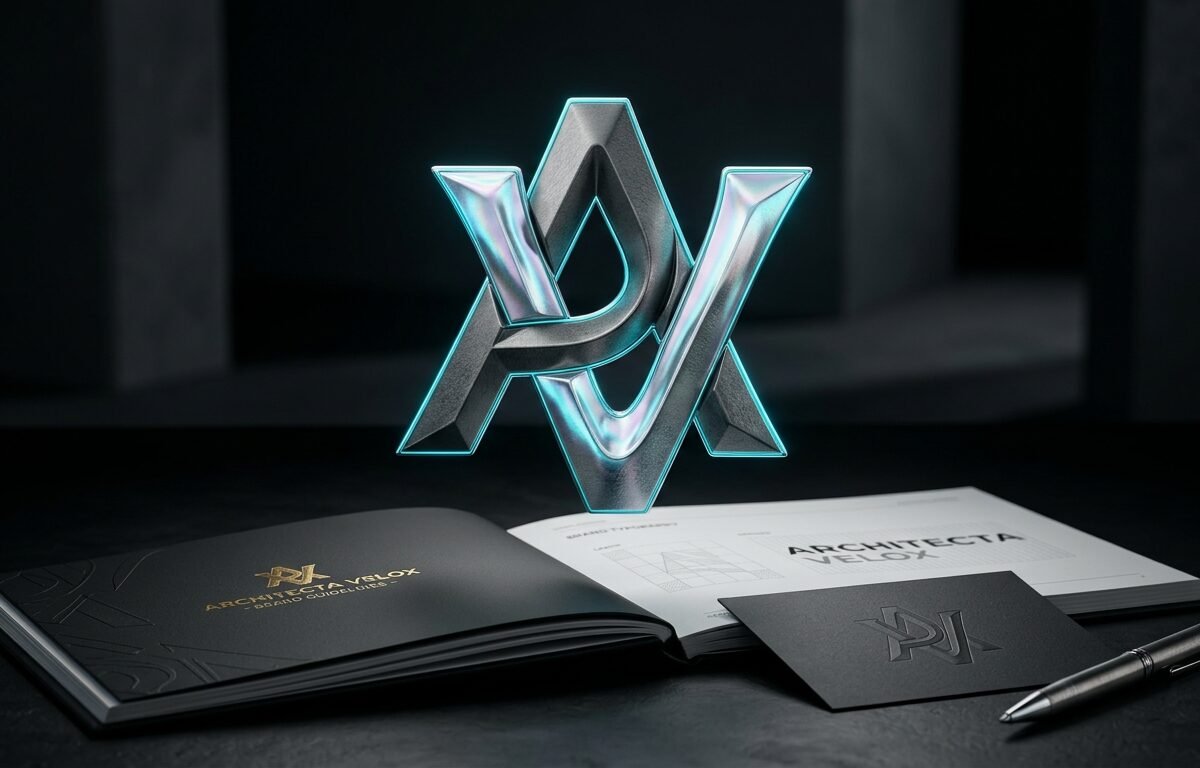

In an era saturated with ephemeral digital products and commoditized visual trends, creating a brand that commands immediate respect and endures across decades is the ultimate competitive advantage for modern founders.
Too often, early-stage businesses conflate a brand identity with merely possessing a stylized logo vector. While the logo acts as the primary sensory anchor of an organization, it constitutes only the tip of an extensive communicative iceberg. A truly resilient brand identity functions as an interconnected operating system—orchestrating typography, negative space, chromatic relationships, motion kinetics, and verbal tonality into an unmistakable signature.
1. Beyond Aesthetics: The Strategic Foundation
Before launching Figma or rendering vector paths, every identity project must answer three fundamental strategic questions:
- Market Differentiation: What visual clichés dominate your industry, and how can your brand posture deliberately diverge from them?
- Customer Resonance: What cognitive and emotional expectations does your target audience bring to every interaction?
- Functional Adaptability: How will the design language perform when compressed into a 16×16 pixel favicon versus expanded across a 50-foot airport billboard?
When design decisions are anchored in strategic rationale rather than arbitrary stylistic whims, the resulting system achieves internal consistency. Every color selection, typographic weight, and layout rhythm serves a measurable purpose: establishing immediate authority and cognitive recall.
2. The Triad of Modern Identity Architecture
A. The Geometric Anchor: Primary & Secondary Marks
Modern visual marks must prioritize radical simplicity without sacrificing memorability. With user interfaces shifting between high-density retina displays, smart watch screens, and responsive headers, complex multi-gradient illustrations inevitably collapse into unreadable visual noise. Leading brands favor bold, geometrically balanced glyphs that retain structural integrity under extreme downscaling.
B. Typographic Hierarchy & Character
Typography is the voice of your brand rendered in black and white. Selecting a primary display typeface establishes psychological demeanor—geometric sans-serifs convey modern precision, humanist serifs telegraph literary authority, while technical monospaces signal algorithmic discipline. The key lies in establishing disciplined scale ratios (e.g., 1.25 Major Third or 1.333 Perfect Fourth) that guarantee effortless editorial scanning across mobile and desktop environments.
C. The Intentional Palette: Contrast and Restraint
Amateur palettes attempt to employ every hue on the spectrum. World-class brand systems exercise extreme restraint: a dominant neutral canvas (monochromatic deep grays or clean off-whites), paired with a single vibrant primary accent and one or two purposeful secondary accents for micro-interactions and status messaging.
3. Documenting the Living Brand: The Digital Style Guide
A brand system is only as durable as its governance. Static PDF style guides frequently gather digital dust while engineering and marketing teams diverge into inconsistent visual practices. Modern creative studios deliver dynamic, component-driven design systems within Figma, directly paired with CSS design tokens that synchronize engineering variables with creative specifications.
Key Takeaways for Founders and Designers
- Consistency creates equity: Changing your visual language every six months destroys recognition before it has time to compound.
- Simplicity scales: The best marks are simple enough to be sketched from memory on a paper napkin.
- Systems defeat artifacts: Design components, spacing rules, and color tokens that empower any team member to produce on-brand assets effortlessly.