
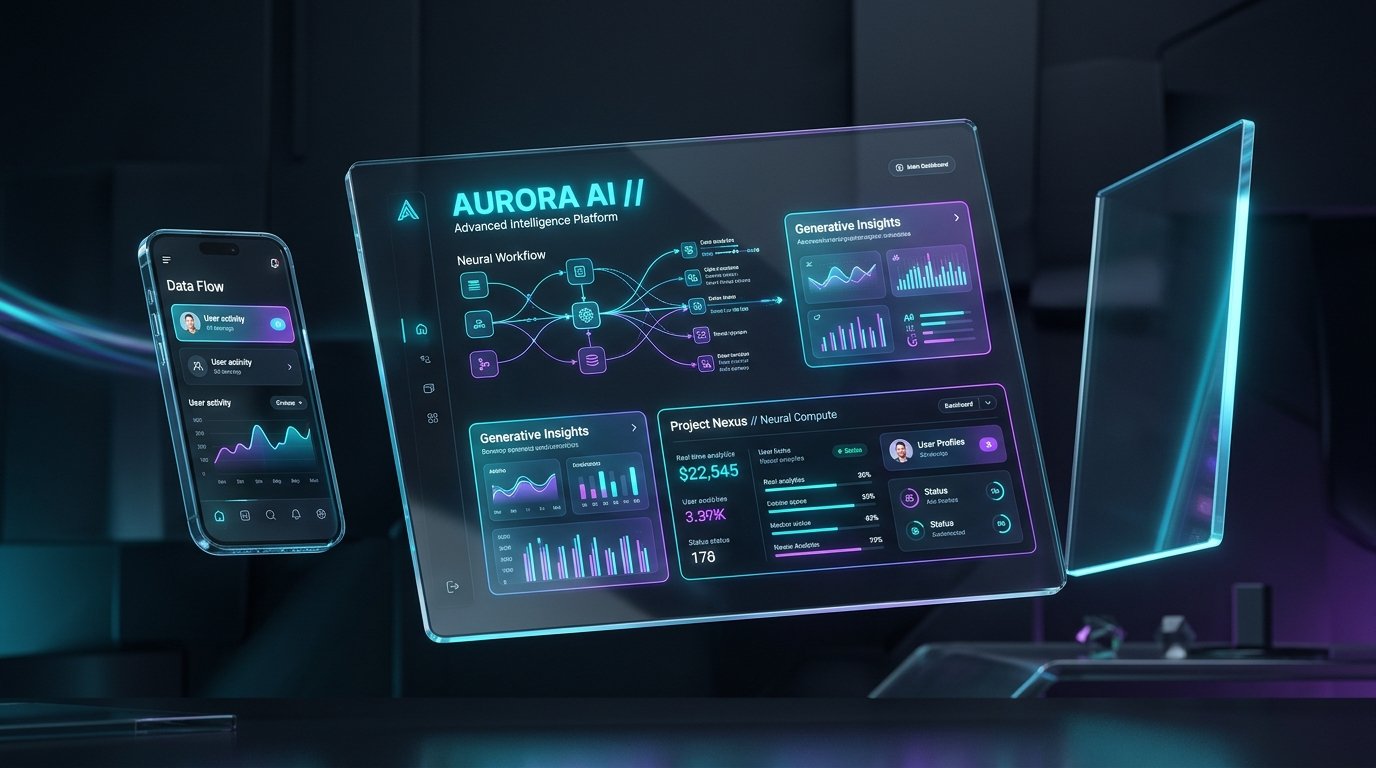
The fundamental premise of user interface design has shifted. For decades, UI/UX designers mapped out rigid, predetermined wireframes: static pages, static dashboards, and fixed button hierarchies. In 2026, the industry has crossed the chasm into AI-native user experiences—software that synthesizes its interface on the fly based on intent, context, and real-time user behavior.
From Static Wireframes to Generative Interface Canvas
In traditional product design, every screen state had to be manually crafted in Figma, tested through prototypes, and translated into fixed CSS/React components. While this deterministic model works for utility forms, modern digital products demand fluid responsiveness. Generative UI does not replace designer intent; rather, it elevates the designer from crafting individual pixels to defining the behavioral constraints, design token boundaries, and emotional tone of the software.
When an enterprise analyst or mobile consumer uses an AI-native app today, the interface adapts in real-time:
- Intent-Driven Modular Layouts: Instead of navigating three nested submenus, the interface dynamically surfaces only the micro-tools, data visualizers, and actions relevant to the current objective.
- Contextual Micro-Surfaces: Data tables morph into interactive trend heatmaps or decision trees depending on the query velocity and user expertise tier.
- Stateful Memory Systems: The interface remembers cognitive preferences—density, color contrast, and navigation rhythm—without requiring explicit manual dashboard customization.
“Great design in the AI era is no longer about drawing every screen—it is about orchestrating an intelligent design system that responds with beauty, clarity, and zero cognitive friction.”
Designing for Non-Deterministic Workflows
The greatest challenge product designers face in 2026 is non-determinism. In classic software, clicking a button always resulted in state A or state B. With AI models and agentic pipelines, the system response can vary significantly. Designing for this reality requires three foundational pillars:
1. High-Trust Latency Feedback & Anticipatory States
When an AI agent performs multi-step reasoning, generic circular loading spinners induce anxiety. High-performing apps employ progressive transparency: visually streaming steps, displaying real-time cognitive breadcrumbs, and rendering skeleton outlines that mirror the emerging result before execution completes.
2. Reversible Direct Manipulation
Users must never feel trapped by algorithmic choices. Every dynamically generated card, layout adjustment, or automated recommendation must include seamless undo, pin, and override primitives. Trust is won when the user understands they retain absolute sovereign control over the canvas.
3. Strict Design Token Guardrails
Generative interfaces cannot run wild with arbitrary colors, typography, or spacing. A robust design system built on atomic tokens ensures that whether a component is pre-designed or algorithmically synthesized, it strictly adheres to WCAG accessibility, brand typography scales, and unified 8pt grid metrics.
The Business ROI: Why Startups Are Replacing Generic Templates
For SaaS startups and digital agencies, adopting AI-native UX principles delivers decisive competitive advantages:
- Dramatically Reduced Onboarding Churn: First-time users are guided through adaptive micro-flows rather than intimidating, cluttered toolbars.
- High Task-Completion Velocity: Cognitive load is slashed by up to 60% when users interact with intent-based inputs rather than manual data hunting.
- Scalable Product Evolution: New capabilities can be integrated into the conversational or adaptive layer without requiring costly, full-site structural redesigns.
Key Takeaways for Product Leaders & Founders
- Design the System, Not Just the Screens: Invest in modular tokenized design systems that intelligent engines can assemble without breaking brand coherence.
- Prioritize Cognitive Clarity Over Visual Novelty: The goal of AI-native UI is not flashy effects, but eliminating friction between human thought and digital execution.
- Partner With Strategic Designers: Building bespoke AI-native products requires an understanding of both visual craftsmanship and underlying system architecture.